InstanTAble
Real-time restaurant discovery and reservations
A rapid concept focused on reducing uncertainty in restaurant bookings by combining real-time availability and reservations in a single experience.
Quick Facts
Role
Product Designer
Type
1 day - Rapid Concept Design
Tools
Figma
Platform
Mobile


Project Overview
The Problem
People often discover restaurants through platforms like Google Maps, but critical information such as real-time table availability is rarely accessible during the decision-making process. As a result, users must switch between websites, phone calls, and booking channels, creating friction, uncertainty, and wasted time in what should be a simple dining experience.
Our Approach
Through rapid desk research and competitive analysis, this concept explores how a restaurant discovery and reservations could be unified into a single experience, helping users make decisions and secure tables more efficiently.
Design Approach
Desk
Research
Competitive
Analysis
User Journey
Mapping
Rapid
Protoyping
Research & Insights
Methods Used
Rapid desk research
Competitive benchmarking
Assumption-based problem framing
Knowledge from previous researches
Given the limited timeframe of this webinar challenge, I adopted a lean approach: rapid desk research, competitive benchmarking, and assumption-based problem framing. While no primary user interviews were conducted, the concept was built upon observable behavioral patterns in existing dining and reservation platforms.
Key Insight
1
Context Switching is Costly
Users lose time and momentum navigating across multiple platforms, apps, and booking systems to complete a single dining decision.
2
Competition
While similar solutions exist, adoption is limited and the market remains fragmented, leaving room for a more integrated and user-centric experience.
3
Mobile is Essential
Dining decisions frequently happen on the go, making a seamless mobile experience essential to support real-time planning.
Design Approach
Based on the research, the core principles to guide the design decisions were:
Simplicity
The experience should eliminate friction by reducing steps, avoiding platform switching, and enabling fast, intuitive actions from discovery to booking
Real-Time
Transparency
Users need reliable, up-to-date information about availability, wait times, and reservation status to make confident decisions before leaving home.
Trust & Confirmation
Every action, especially reservations, must feel secure and guaranteed, reinforcing reliability and reducing uncertainty.
Sketches
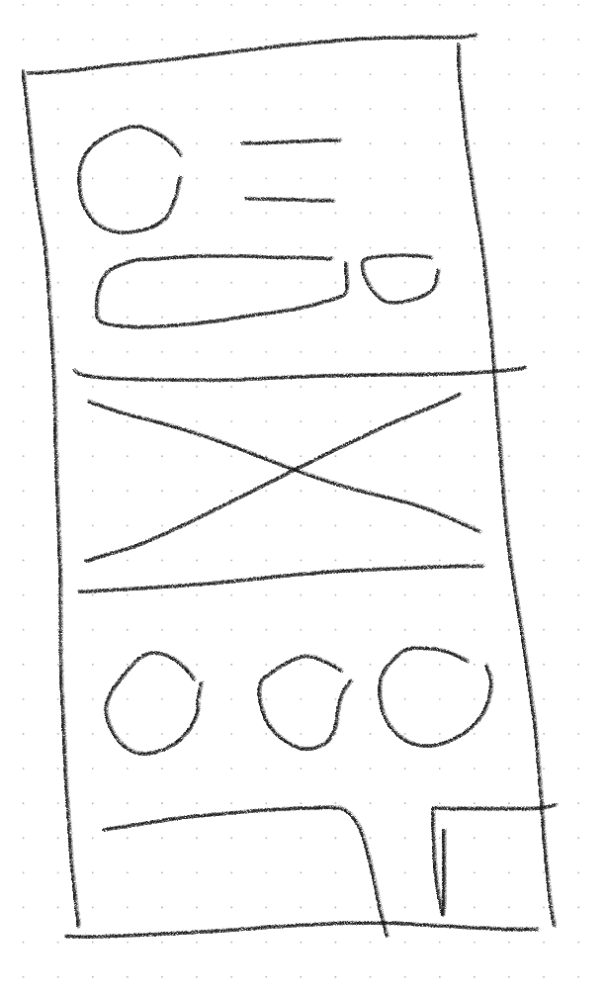

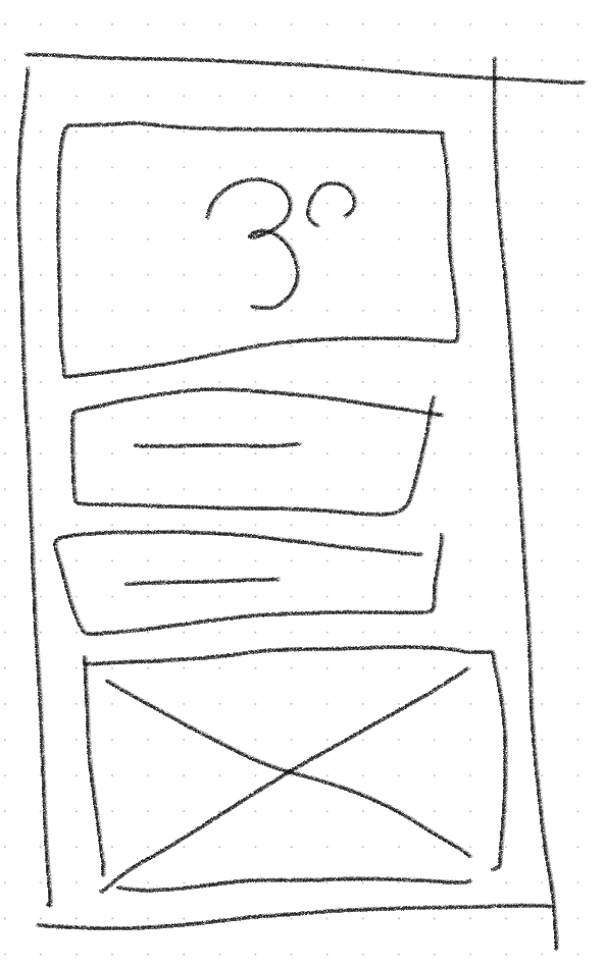
The Solution
The solution is a mobile-first app that integrates restaurant discovery, real-time table availability, and seamless reservations into a single, unified experience. By consolidating essential dining information and adding live availability insights, the app empowers users to make confident, efficient decisions without unnecessary friction or uncertainty.
Smart Discovery Home
The home screen features a location-based map with nearby restaurants and personalized recommendations based on user history.
It simplifies discovery by combining exploration and decision-making into a single, seamless experience.
Seamless Reservation & Requests
The app allows users to book a table instantly, make special requests, and receive clear confirmation, all within one platform.
Join the Waitlist Remotely
If no tables are available, users can join a restaurant’s waitlist directly through the app and track their status in real time. Reducing uncertainty and eliminating the need to wait on-site.
Open prototype
Scope & Next Steps
As this was a one-day challenge, the focus was on defining the core user journey. Several features were identified but not fully designed due to time constraints.
Conceptualized Features
Persolalized Dining History
A feature allowing users to track past visits, preferences, and favorite spots, enhancing engagement and making dining more curated and social.
Live Table Availability
Real-time visibility into table status and estimated wait times, enabling informed decisions before heading to a restaurant.
Next Steps
User Validation
Conduct usability testing and interviews to validate assumptions and refine the core flow.
Iteration based on insights
Improve the platform based on behavioral data and user feedback.
Restaurant dashboard design
Develop the restaurant-facing version of the app, including availability management, booking control, and waitlist handling.
Restaurant-side incentives
Define the value proposition for restaurants to ensure adoption and long-term engagement.
Following validation and ecosystem alignment, the next logical step would be prioritizing features based on impact and feasibility to evolve the platform sustainably.
Key Learnings
In rapid design challenges, clarity of differentiation is more valuable than feature completeness.
Designing for a two-sided platform requires balancing user needs with business incentives from the start.
Limited time forces sharper decisions around scope, focus, and what truly delivers user value.
Want to see more?
Next Project